
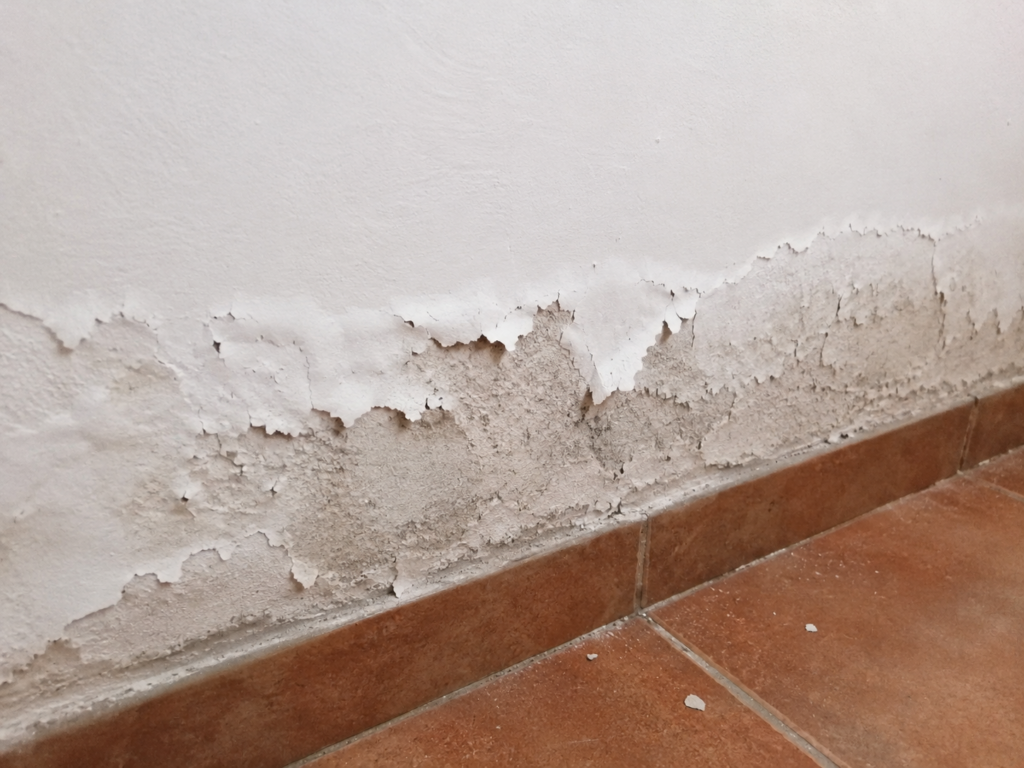
Have you noticed damp patches slowly climbing up your walls, peeling paint, or a persistent musty smell inside your home? These are often the first warning signs of rising dampness — a common moisture problem that can seriously affect both the structure of a property and indoor comfort levels.
Understanding rising dampness causes is essential for preventing long-term damage and choosing the right treatment solution. In this guide, we’ll explore how rising damp develops, what factors contribute to it, and the most effective ways to control it.
What Is Rising Dampness?
Rising dampness, also known as capillary damp, occurs when moisture from the ground travels upward through porous building materials such as brick, stone, mortar, and plaster.
This moisture movement happens through a natural process called capillary action, where water rises through tiny pores inside walls — similar to how a sponge absorbs water.
Rising damp usually affects ground-floor walls and often appears as:
- dark damp patches
- peeling paint
- bubbling plaster
- salt deposits
- mould growth
- musty odours
Without treatment, rising damp can gradually weaken walls and damage internal finishes.
The Capillary Process Behind Rising Damp
Capillary action is the main mechanism responsible for rising dampness.
Porous building materials contain microscopic channels that allow moisture from the ground to move upward through walls. As moisture evaporates from the wall surface, more water is continuously drawn up from below, creating an ongoing cycle.
In some cases, moisture can rise over one metre above ground level, especially in older properties with highly porous materials or ineffective damp protection systems.
Main Rising Dampness Causes
Several factors can contribute to rising damp problems inside buildings.
Damaged or Missing Damp-Proof Course (DPC)
One of the most common rising dampness causes is the failure or absence of a damp-proof course.
A damp-proof course is a protective barrier installed inside walls to stop ground moisture from rising upward. Older buildings may have deteriorated DPCs or no damp protection at all.
When the barrier fails, moisture can travel freely into the wall structure.
High External Ground Levels
If the ground level outside the property sits above the damp-proof course, moisture can bypass the protection and enter the walls directly.
Poor drainage around the property can also increase moisture accumulation near foundations.
Porous Construction Materials
Older bricks, lime mortar, and other breathable building materials are often highly porous. These materials absorb moisture more easily, increasing the risk of capillary damp.
In some properties, porous materials can even reduce the effectiveness of existing damp-proof systems.
Structural Cracks and Damaged Mortar
Cracks in masonry and deteriorated mortar joints create additional pathways for moisture to enter and travel through walls.
These defects often worsen over time if moisture problems are ignored.
The Role of Salts in Rising Dampness
Ground moisture contains natural salts such as chlorides, nitrates, and sulphates.
As moisture evaporates from the wall surface, these salts remain behind and accumulate inside plaster and masonry.
Salt contamination can lead to:
- white powdery deposits (efflorescence)
- plaster deterioration
- paint failure
- persistent moisture retention
Some salts are hygroscopic, meaning they attract moisture from the air even after the original damp issue has been treated.
How Climate and Ventilation Affect Rising Damp
Climate conditions can significantly influence rising damp problems.
Cold temperatures and poor ventilation slow down evaporation, allowing moisture to rise higher within walls. North-facing walls and poorly heated rooms are often more vulnerable because they remain colder and dry more slowly.
In properties with limited airflow, moisture becomes trapped inside, worsening damp conditions and increasing the risk of mould growth.
Traditional Solutions for Rising Damp
Several conventional methods are commonly used to control rising dampness.
Chemical Damp-Proof Course Injection
Chemical DPC injections create a new moisture barrier inside walls using water-repellent creams or liquids.
Advantages
- widely used professional treatment
- effective in many older properties
- helps block capillary moisture movement
Limitations
- requires drilling into walls
- may require replastering
- effectiveness depends on wall condition
Physical Damp-Proof Membranes
Physical damp-proof membranes form a waterproof barrier inside the wall structure.
Advantages
- long-lasting moisture protection
- highly effective barrier system
Limitations
- installation can be disruptive
- retrofitting older buildings may require major construction work
Improving Drainage
Proper drainage systems help divert water away from foundations and reduce excess ground moisture around the building.
Maintaining lower external ground levels can also help prevent moisture from bypassing damp-proof systems.
Electro-Osmosis: A Modern Rising Damp Solution
Modern rising damp treatments now include electro-physical systems such as electro-osmosis.
This technology works by generating a low electrical field inside the walls that interrupts the capillary movement of water, helping drive moisture back toward the ground.
Unlike traditional damp-proofing systems, electro-osmosis avoids:
- chemical injections
- extensive drilling
- disruptive building work
This makes it particularly suitable for:
- older homes
- historic buildings
- sensitive structures
- homeowners seeking non-invasive solutions
At HUMIX, electro-physical technology offers a long-term rising damp solution without major renovation work.
Why Early Treatment Matters
Treating rising dampness early helps prevent more serious long-term problems.
Structural Protection
Dry walls maintain their strength and stability for longer.
Healthier Indoor Air
Reducing moisture lowers the risk of mould and airborne allergens.
Better Energy Efficiency
Dry walls retain heat more effectively, improving comfort and reducing heating costs.
Property Preservation
Controlling damp helps maintain the appearance, value, and condition of the property.
Final Thoughts on Rising Dampness Causes
Understanding rising dampness causes is the first step toward protecting your property from moisture-related damage.
Factors such as failed damp-proof courses, porous building materials, poor drainage, salt contamination, and inadequate ventilation all contribute to rising damp problems.
Fortunately, a combination of effective damp-proofing, proper maintenance, ventilation improvements, and modern electro-physical technologies can help control moisture and protect your home long-term.
Early diagnosis and the correct treatment solution are essential for preserving the comfort, safety, and structural integrity of your property.