
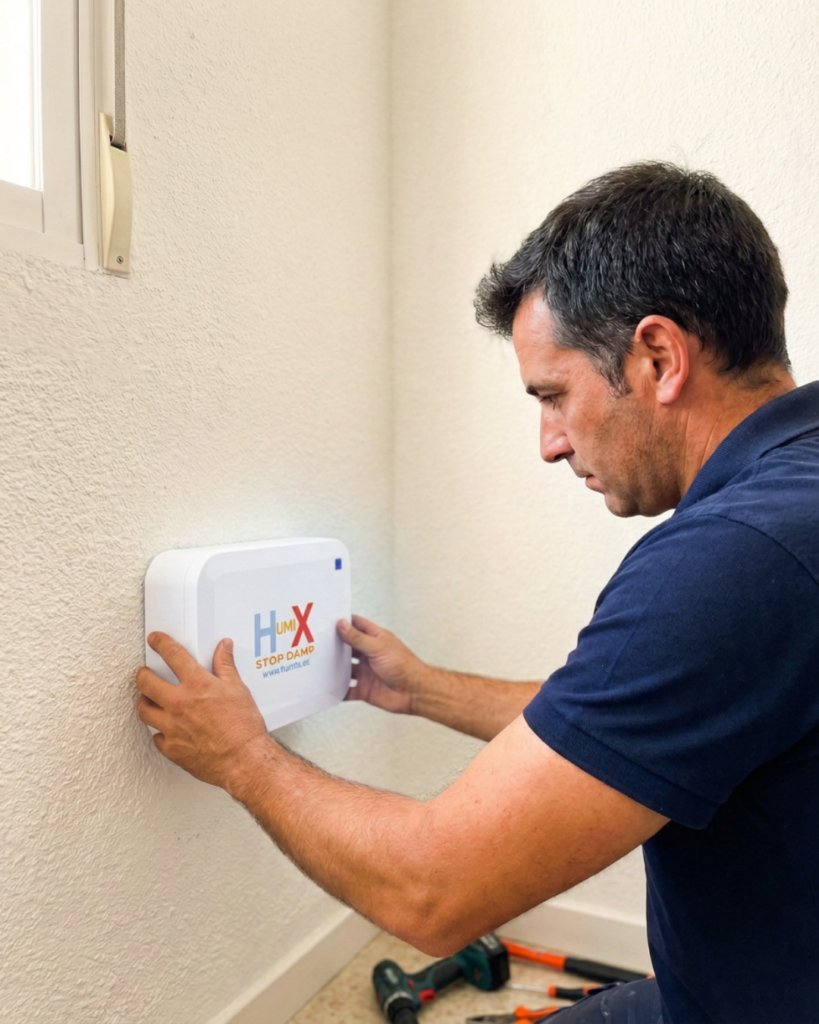
Rising damp is one of the most common moisture problems affecting homes, especially older properties. Peeling paint, damaged plaster, musty smells, and damp patches near the bottom of walls are often clear warning signs that moisture is moving upward through the building materials.
If left untreated, rising damp can gradually damage walls, decorative finishes, indoor air quality, and even the overall comfort of the property. Fortunately, modern solutions such as electro osmosis systems offer an alternative way to control moisture without major construction work.
What Is Rising Damp?
Rising damp occurs when moisture from the ground travels upward through porous materials such as brick, stone, mortar, and plaster. This movement happens through capillary action, where water naturally rises through tiny pores inside the walls.
Older buildings are often more vulnerable because they may have:
- damaged damp-proof courses (DPC)
- outdated waterproofing systems
- porous construction materials
- poor drainage around the property
Over time, moisture can carry salts into the walls, causing plaster deterioration, bubbling paint, and visible tide marks.
Common Signs of Rising Damp
Several symptoms may indicate rising damp problems inside a property:
Damp Patches Near Floor Level
Dark or discoloured areas often appear along the lower sections of internal walls.
Peeling Paint and Damaged Plaster
Excess moisture weakens decorative finishes, causing paint to bubble and plaster to crumble.
Musty Smells
Persistent damp odours can develop when moisture remains trapped inside walls for long periods.
Salt Deposits
White powdery residue on walls may appear as moisture evaporates and leaves salts behind.
Early diagnosis is important to prevent more extensive moisture damage.
What Is Electro Osmosis for Rising Damp?
Electro osmosis is a damp-control system designed to reduce the upward movement of moisture through walls.
The technology works by generating a very low electrical field inside the wall structure. This process helps alter the movement of water molecules, encouraging moisture to move back downward instead of continuing to rise through the masonry.
Unlike some traditional damp-proofing methods, electro osmosis systems are designed to work continuously with minimal disruption to the property.
How Electro Osmosis Systems Work
Electro osmosis systems typically involve:
- installing small electrodes into affected walls
- connecting the system to a low-voltage power source
- creating an electrical field that interferes with capillary moisture movement
Over time, the moisture content inside the walls gradually reduces as the wall begins to dry naturally.
The process is generally non-invasive compared to large-scale structural damp-proofing works.
Advantages of Electro Osmosis Damp Treatment
Electro osmosis systems offer several potential benefits for homeowners dealing with rising damp.
Minimal Structural Disruption
Installation usually requires far less building work than traditional physical damp-proof course replacements.
Suitable for Older Buildings
Historic and older properties can often benefit from non-invasive moisture control systems where preserving the structure is important.
Continuous Moisture Control
Once installed, the system operates continuously to help control moisture movement inside walls.
Reduced Maintenance
Most systems require very little maintenance after installation.
Cleaner Installation Process
Electro osmosis avoids extensive drilling, chemical injection, or major wall removal in many cases.
Electro Osmosis vs Traditional Damp Treatments
Several methods are commonly used to treat rising damp.
Chemical Damp-Proof Injection
Chemical creams or liquids are injected into walls to create a moisture barrier.
Advantages
- widely used
- effective in many situations
Limitations
- requires drilling
- may require replastering
- effectiveness can vary depending on wall condition
Physical Damp-Proof Membranes
Physical waterproof barriers are installed inside walls to block moisture.
Advantages
- long-lasting barrier
- effective moisture protection
Limitations
- highly disruptive installation
- major construction work may be required
Electro Osmosis Systems
Electro osmosis systems focus on controlling moisture movement using electrical principles.
Advantages
- less invasive
- suitable for sensitive structures
- ongoing moisture management
Limitations
- professional assessment is required
- results depend on wall condition and moisture source
Additional Measures to Help Control Rising Damp
Electro osmosis systems often work best when combined with other moisture-management improvements.
Improve Ventilation
Proper airflow helps walls dry more efficiently and reduces indoor humidity.
Repair External Damage
Cracks, damaged gutters, and poor drainage should be repaired to reduce excess moisture exposure.
Use Breathable Materials
Breathable plasters and paints help moisture evaporate naturally instead of becoming trapped inside walls.
Monitor Humidity Levels
Controlling indoor humidity can help prevent additional moisture-related problems such as condensation.
Is Electro Osmosis Suitable for Every Property?
Every property is different, and rising damp problems can have multiple contributing factors.
A professional damp survey is important to determine:
- the true source of moisture
- wall construction type
- existing damp-proof protection
- severity of the problem
In some cases, electro osmosis may be combined with additional damp-control measures for the best long-term results.
Final Thoughts on Electro Osmosis for Rising Damp
Rising damp can seriously affect the condition, comfort, and appearance of a property if ignored for too long.
Modern electro osmosis systems offer a less invasive alternative to traditional damp-proofing methods, helping control moisture movement while reducing disruption inside the home.
When combined with proper ventilation, drainage improvements, and regular maintenance, electro osmosis technology can help create a drier, healthier indoor environment and protect walls from long-term moisture damage.